
A storyboard in ten scenes
Beyond Lifestyle
Families now judge a care home on clinical proof. The model that answers them, and the evidence behind it.
For two decades, premium care competed on lifestyle. That is changing.
Comfort, dining and activities are no longer what decides. Lifestyle alone is proving less persuasive, and care aligned to clinical outcomes moves the proposition from a preference to a need.
Context
Families are taking longer to commit. The cost of care is weighed against a stagnant housing market, mortgage costs and living expenses, so a home must prove more before a family signs. Residents arrive with more advanced, overlapping conditions. For a home, every month of delay is an empty bed.
Challenge
For some families, luxury now reads as a nice-to-have, and care itself feels like something they can try to replicate at home. Demand has not fallen. It has changed shape. Since 2021, UK searches for dementia care homes have doubled and searches for CQC ratings have nearly tripled.
Solution
NHS consultants design condition frameworks for cancer, dementia, diabetes, stroke and heart disease, which your teams embed into the care they already deliver. Headland's clinicians help you build referral relationships with local consultants and GPs, and give your marketing team the collateral to show that capability.
Outcome
Residents live with more stability, and families see care they could not provide at home. Referrers can vouch for you, so decisions come sooner and hesitant enquiries become admissions. The capability lives in your teams and your local referral relationships, which a lifestyle-only competitor cannot copy.
The full case rests on three independent bodies of evidence. Each was gathered a different way. All three point the same direction.
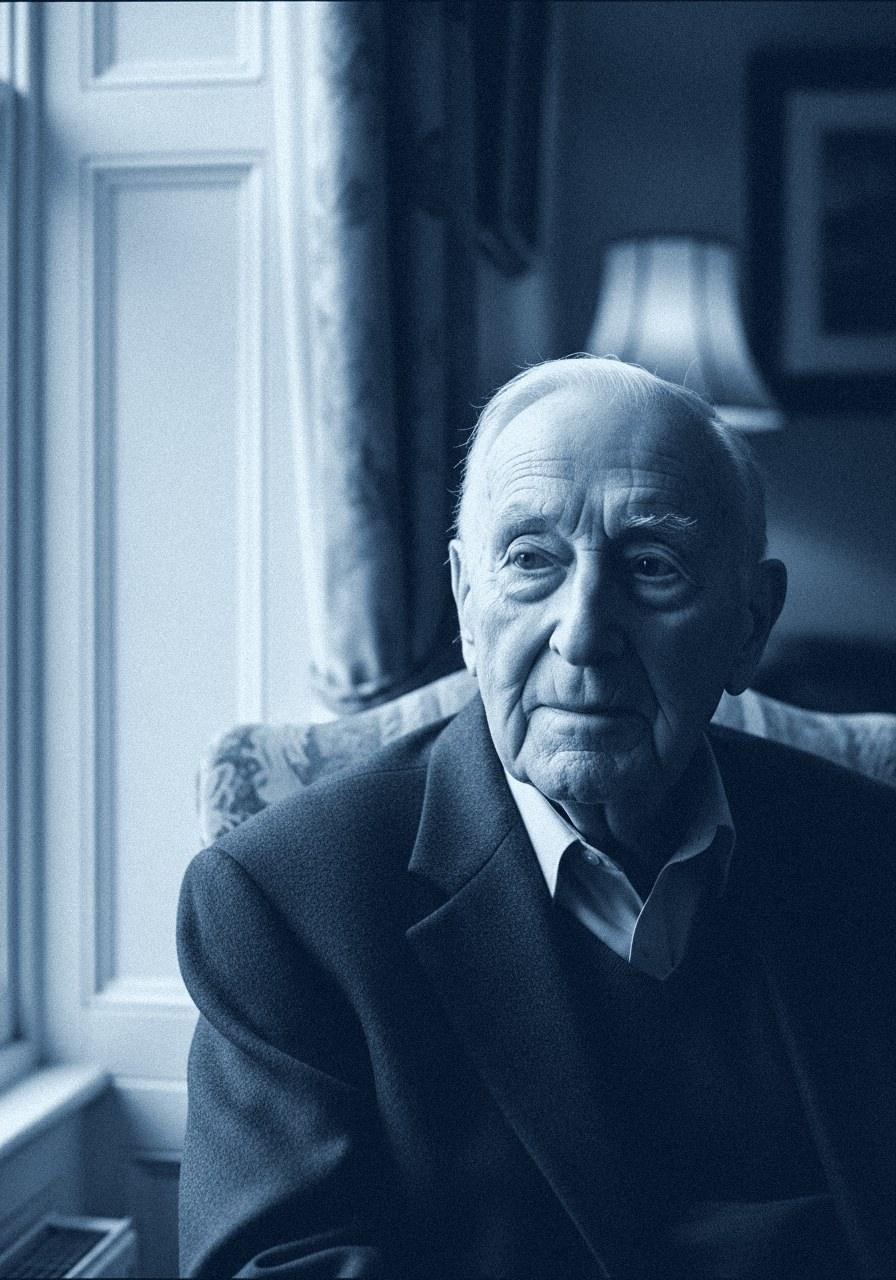
The person arriving today is older, frailer and clinically complex.
Published market and health data describes the population now entering premium residential care. It is not the lifestyle cohort of a decade ago.
Dementia is the arrival condition, not something that develops later in the stay. The population entering care is, by a clear majority, a population with active, complex needs from day one. Entry is later, because home-first policy keeps people in the community longer, so the clinical picture is more advanced on the day of the move.
Alzheimer's Society, 2023; CQC, 2023; NHS England, 2024.
Life expectancy is rising again. Healthy life expectancy is not. The gap between them, years lived with conditions that need structured support, is widening. These are the years premium care serves.
ONS Health State Life Expectancies; indicative, gender-averaged, as presented in Beyond Lifestyle: The Evidence.
Why residents now arrive with several long-term conditions at once
Each grid shows the population, with one in the group affected.
People in the UK who will develop cancer in their lifetime.
UK deaths caused by heart and circulatory disease.
People aged 65 and over living with dementia.
People aged 75 and over in England living with diabetes.
Men who will have a stroke in their lifetime.
Women who will have a stroke in their lifetime.
Sources: Cancer Research UK (2024); Alzheimer's Society (2023); British Heart Foundation (2025); Stroke Association (2024); Diabetes UK / NHS.
Rising around 10% a year. As families carry more cost, they apply more scrutiny.
Demand is intact. The question is what families now judge it on.
The margin for a poor placement is smaller. A home that cannot manage progression is not a viable choice.
Families take longer to decide, and homes must prove more before they do.
Sources: Knight Frank UK Healthcare, 2025; NHS England, 2024; Care Quality Commission, State of Care, 2023.
What Chapter One establishes
Demand for premium care is strong and occupancy is high, but the people it serves are clinically complex on arrival and paying more for the privilege. The market structure rewards clinical capability and punishes its absence.

When the moment comes, families turn to the search bar.
Five years of unprompted UK search behaviour records what people ask at the moment of need, before any provider has shaped the conversation.
Families search for place, then proof
The market begins with a place, then a condition, then proof that a home can cope. Brand and lifestyle terms barely feature at the moment of need.
Around 30,000 UK searches a month begin with a location, not with any brand, group or lifestyle term. The market does not arrive through the front door of a website. It arrives through a map.
The single most-searched way of judging a home is the regulator's scorecard. The decision-trigger question is clinical. Even the biggest cost question in the category is a dementia question.
Source: Ahrefs UK keyword data, July 2026. Monthly volumes, rounded.
Searches for dementia care held broadly flat for three years, then began climbing sharply. UK monthly searches for the dementia care cluster, as a 12-month average, are up 40% on the 2021 to 2023 baseline: ±2,550 a month then, ±3,570 now. Premium queries are growing too, but from a far smaller base.
“Dementia care homes near me” up from ±440 to ±1,010 monthly searches since 2021.
CQC-ratings searches nearly tripled over the same period.
The pages that rank today are weak. A clinically credible authority site could capture this demand.
Source: Ahrefs UK keyword data, monthly search volumes, January 2021 to 2026. Rolling 12-month averages; volumes rounded.
The pattern is condition + town
Beneath the head terms sits a long tail of “dementia care home” joined to a town name, repeated across hundreds of towns at 200 to 250 searches a month each. A home that can prove condition capability is visible exactly where this demand lives. A lifestyle-only home is invisible to it.
When families ask the machines, the answer is clinical
Asked the everyday questions (“how do I choose a care home?”, “what makes a good care home?”, “how do I choose a dementia care home?”), today's AI assistants and answer engines return a consistent hierarchy. Even for the explicit query “best luxury care home”, the guidance redirects to clinical proof. Luxury amenities appear only as secondary “lifestyle” detail.
- CQC
- NHS
- Alzheimer's Society
- Dementia UK
- Age UK
- Healthwatch
- 1CQC rating and latest inspection reportRegulatory
- 2Staff training, skills and qualificationsClinical
- 3Specialist dementia and nursing expertiseClinical
- 4Person-centred, regularly updated care plansClinical
- 5Reputation and verified reviewsTrust
- 6Dementia-friendly, safe environmentEnvironment
- 7Cost and funding assessmentCost
Illustrative. Captured from live UK Google and AI answer surfaces, June 2026. Qualitative corroboration, not a quantified share-of-voice measurement.
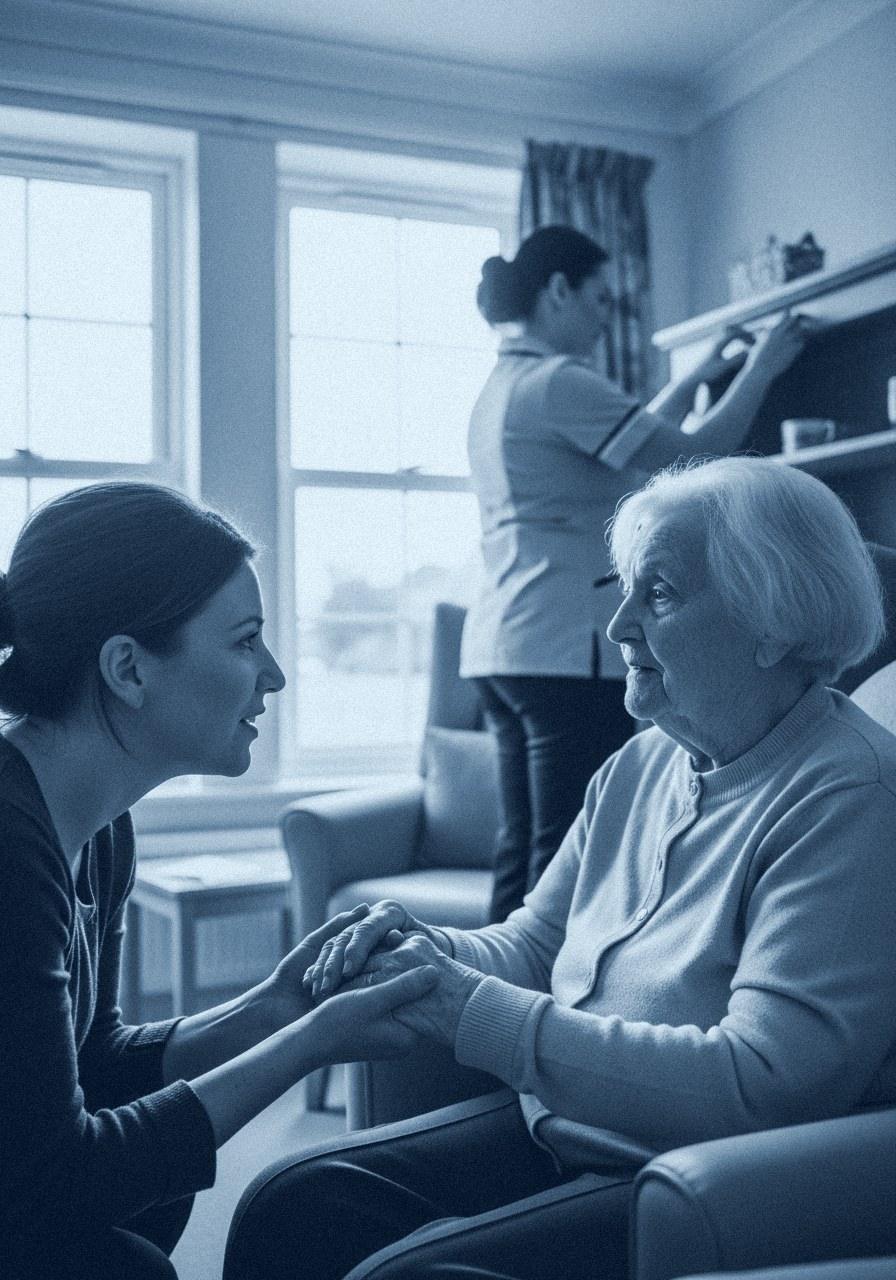
We asked 2,000 people what they actually expect.
Market data shows who arrives. Search shows how families look. The final chapter asks them directly, in a nationally representative poll commissioned for this work.
Luxury facilities alone are not enough. I would want clear evidence of clinical care capability.
88% of UK adults agree. Just 0.7% disagree.
- Strongly agree 63.0%
- Somewhat agree 25.3%
- Neither / not sure 11.0%
- Disagree 0.7%
Often the residents themselves.
The generation choosing now, for a parent or themselves.
The decision-makers of the coming decade.
Q9. Base: all respondents (n=2,000). Survey ref. RB B 0805 P, 2026.
Proof outranks polish
Across twelve questions, the lifestyle signal is present but subordinate. Cost weighs heavily, health is what moves families, and what they want most is a clear explanation of how care is delivered.
64% are concerned about the affordability of private residential care and 33% say economic conditions make them more likely to delay. Yet the catalyst is clinical. Only 5% are actively considering care within three years, so a home's clinical reputation is judged long before the first enquiry. Q1, Q2, Q3, Q12.
Nearly three quarters say it matters that a home can manage complex conditions even if their relative does not yet have such needs. Clinical depth is how a home promises permanence. Q6, Q7.
- Clinical or regulatory proof
- Lifestyle signal
The decision is led by the quality of people and the question of value. Families have not stopped valuing environment. They have stopped letting it decide.
Base: all respondents (n=2,000). Survey ref. RB B 0805 P, 2026. Approximate margin of error ±2.2% at the 95% confidence level.
Capability is a story that can be told
The most valued proof, a clear explanation of the care approach, is precisely what a clinically serious provider can articulate and a lifestyle-led competitor cannot. Families are not asking for jargon or accreditation alone. They are asking to understand the approach, and to see that it works.
Demand is intact. The basis of judgement has moved.
Each chapter was gathered independently and could stand alone. Their value is that they agree. The three were not designed to converge, so their convergence is a finding, not a construction.
The buyer is already complex
Most residents arrive with dementia. Fees are high and rising. Demand is strong but scrutiny is intensifying. The market structurally rewards clinical capability.
Unprompted intent is clinical
Families begin with place, then judge on proof. Dementia-care searches have doubled since 2021 and CQC-ratings searches have nearly tripled. The pattern is condition plus town.
Buyers say it themselves
88% say luxury alone is not enough without clinical evidence. Facilities rank below regulatory and clinical proof. Families want capability demonstrated.
The premium care market has moved from lifestyle to clinical credibility.
Demand is intact, but the basis of judgement has changed. The providers who lead with demonstrable clinical capability, and treat lifestyle excellence as its complement, are positioned for the scrutiny that now defines the category.
High-quality care, not configured for clinical outcomes
Premium residential care continues to deliver high-quality, compassionate care, but it is rarely designed to support clinical outcomes or ongoing treatment pathways. Structured clinical input into care design is limited or absent.
The perception gap
The shift in need is not yet matched by a shift in care design, and it is not yet visible to families or referrers. Many families believe care can be replicated at home. The level of clinically informed support actually required is not visible, so the true complexity and value of care is consistently underestimated.
The commercial consequence
In oversupplied premium markets, providers competing on amenity alone are competing on the wrong axis. GPs, discharge teams and care coordinators increasingly shape admission decisions and are asking sharper questions about clinical stability, treatment tolerance and whether a home can credibly support a resident through cancer treatment or post-stroke recovery.
Families often believe care can be replicated at home. The gap between that belief and clinical reality is where providers are losing ground.
Beyond Lifestyle: A Strategic Summary, 2026

Clinical leadership, without becoming a medical setting.
Not more nurses or a clinic. Structured, evidence-informed daily practice that supports stability, slows avoidable deterioration, and gives families and referrers a clinically grounded reason to choose your home.
Supporting clinical outcomes, within social care scope
The model defines the role of the care home in supporting clinical outcomes within the scope of social care. It complements existing healthcare provision rather than substituting for it. There is no diagnosis, no prescribing and no medical decision-making, and it does not replace consultants, GPs or specialist nurses.
Instead it offers structured daily support that improves stability, helps clinicians make better-informed decisions, and keeps residents engaged with their treatment pathways. That reduces the risk of treatment interruption, improves adherence and appointment attendance, and in conditions such as cancer can directly influence a resident's eligibility for, and tolerance of, treatment.
Keeping residents strong and well nourished through treatment, with staff educated to spot side effects and infection signs, and to escalate to oncology.
Led by an oncology consultant and a cancer nurse specialist. Supports treatment tolerance and eligibility.
Early stage. Routine and engagement shaped by a psychotherapist to sustain function, with sudden change read as possible delirium rather than progression, and flagged early.
Psychotherapist-designed routine and engagement.
Meals designed with a dietitian to steady glucose, daily foot checks, and staff who recognise hypo warning signs and raise concerns with the GP.
Dietitian-led nutrition planning.
Post-acute. Physiotherapy-informed practice to keep rehabilitation moving, mealtimes run to speech and language therapy guidance, and secondary prevention support.
Physiotherapy-informed rehabilitation.
Sodium-aware cooking and paced activity, with daily checks of weight, breathlessness and swelling so early deterioration is reported rather than missed.
Daily observation built into routine care.
pillars
- 1
Care coordination
Consistent communication between care staff, clinicians, families and external health professionals, so care is joined up and nothing falls between departments or shifts.
- 2
Clinical care support
Evidence-based clinical guidance embedded into daily routines, from medication management and symptom monitoring through to condition-specific observations and timely escalation.
- 3
Diet and nutrition
Condition-appropriate nutrition planning developed with dietitians and clinical specialists to support health outcomes, manage symptoms and maintain the physical wellbeing and dignity of every resident.
- 4
Movement and mobility
Physiotherapy-informed mobility programmes matched to each condition and each resident's capability, designed to maintain independence, reduce fall risk and support quality of life.
- 5
Engagement and routine
Psychotherapist-designed activity and daily routine frameworks that support cognitive health, emotional wellbeing and meaningful engagement, keeping residents connected, stimulated and valued.
- Delivered by a senior clinical specialist. Together, the pillars improve stability, resilience and quality of life while remaining firmly within social care scope, and give a premium provider something it currently struggles to articulate: a credible, clinician-backed account of how the home supports the conditions its residents live with.

In my hospital clinic, I am increasingly seeing older, frailer patients managing conditions that interact with and complicate their care. Many are already in residential care, receiving good support that is not always aligned to the specific conditions they live with. Care homes are set to play an integral part in the clinical solution.
Dr Sheel Mehta, Founder, Clinical Director and Oncology Lead
Six stages across twelve months
Discovery and framework design run in months one and two, with launch in month three. From month three the programme runs in parallel across content, engagement, media and digital, with framework refinement throughout. Every stage is led by a clinician, and the capability it builds stays with your teams.
Discovery
- Consultant-led interviews with leadership and frontline teams
- In-home clinician visits to representative sites
- Baseline mapping of care delivery, capability and workflows
Framework design
- Clinician-authored condition-specific frameworks
- Daily protocols for nutrition, movement, monitoring and escalation
- Scope aligned with NHS pathways, with checklists and success metrics
Education and implementation
- Clinician-led workshops, in person, virtual or hybrid
- Private educational video hub for onboarding and induction
- Refresher workshops and framework updates
Content production
- Filmed in-home content and clinician interviews
- Short-form video for digital and paid search
- Long-form video for the hub
Launch and referral activation
- Parliamentary and per-home launch events
- Clinician roundtables
- Printed frameworks mailed to referral influencers local to each home
PR and thought leadership
- National, trade and local media programme
- Monthly reporting on enquiries, conversion and referral source
- Active delivery
- Launch moment
- Ongoing activity
From clinical credibility to confident referral
Clinical credibility becomes a commercial advantage only when it is carried into the conversations families and professionals are already having. Four workstreams do that work.
Clinical authority and credibility
Consultant-designed frameworks positioned as the clinical differentiator. Printed A5 frameworks go to local clinicians and referral influencers with a cover letter from your chief executive.
Referrer and stakeholder engagement
Peer-to-peer parliamentary roundtables where practical, and locally hosted clinician roundtables for each home with written reports and structured follow-up.
PR and thought leadership
A national, trade and regional media programme aligned to the clinical positioning. Clinician-led commentary, opinion pieces and speaking opportunities.
Digital demand capture
Condition-led search and paid campaigns matched to real intent, with retargeting across long decision periods. Landing pages built around condition pathways and improved on enquiry and referral data.
The point of all four
Not louder marketing. A clearer, clinically grounded answer to the questions families and referrers are already asking, delivered where they are already looking.
Designed and owned by practising clinicians
Alongside the clinicians sits an advisory board that leads strategy, positioning and parliamentary engagement. The division of labour is deliberate. Clinical decisions rest with clinicians, and the board makes sure their work reaches the audiences that matter.
Dr Sheel Mehta
NHS Consultant at the Royal Surrey County Hospital and the trust's Bladder Cancer Lead. Trained at UCL, Harvard Medical School and The Royal Marsden. She ensures every framework is grounded in current evidence, real-world patient pathways and professional best practice.

Dr Arup Sen
A triple-accredited Consultant Physician at UCLH with nearly a decade of frontline NHS experience, contributing geriatric, stroke and general internal medicine expertise to the condition frameworks.

William Walter
Over 15 years in media and consultancy, with expertise in corporate communications, education and adult social care. He advises some of the country's leading care providers on their political and media engagement.

The Rt Hon Damian Green
Former Deputy Prime Minister with responsibility for social care and current Chair of the Social Care Foundation. He leads parliamentary engagement and convenes senior clinicians, policymakers and sector leaders.

Clare Williamson
Extensive clinical experience supporting patients through complex care pathways, contributing to the evidence base of the frameworks and to engagement with clinicians, providers and families.
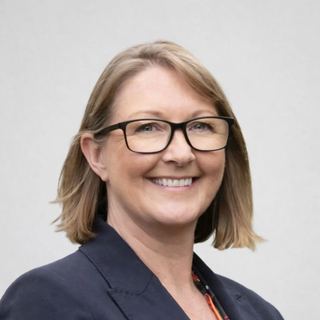
Danielle Freeth
An experienced counsellor and clinical supervisor specialising in the psychological impact of cancer diagnosis, treatment and survivorship. She leads the psychological care framework.

Kelly Thompson
Extensive NHS experience across respiratory, neurological, orthopaedic and musculoskeletal physiotherapy. She contributes to the design and delivery of rehabilitation within the frameworks.

Charlotte Foster
Senior Specialist Dietitian at Barts Health NHS Trust and founder of DINE, a personalised nutrition clinic. She leads the dietetic and nutritional dimensions of the frameworks.
Bridgehead Communications, the partner on Beyond Lifestyle, is a specialist PR and communications agency. Its social care division, Bridgehead Social Care, supports the research, media and parliamentary programme around the frameworks.
Compete on presentation, or lead on outcomes
Providers who act now can define this new standard, rather than compete to catch up with it later. An initial framework can be ready for review within four to six weeks of engagement. The full programme runs across twelve months, with the credibility-building moments sequenced from month three.
Identify priority conditions for framework development
Appoint consultant partners from the Headland team
Begin discovery and framework design
Sequence launch moments and referrer activation

Bridging clinical insight and everyday care
© 2026 Headland Care Consulting and Bridgehead Communications Ltd. All rights reserved. Search figures from Ahrefs UK keyword data, 2021 to 2026. Market and clinical context from Knight Frank UK Healthcare (2025), the Care Quality Commission, the Office for National Statistics, NHS England and the Alzheimer's Society. Consumer research from a national poll of 2,000 UK adults, 2026, survey ref. RB B 0805 P. Figures are rounded and reproduced from the two published volumes. www.headlandcareconsulting.com